
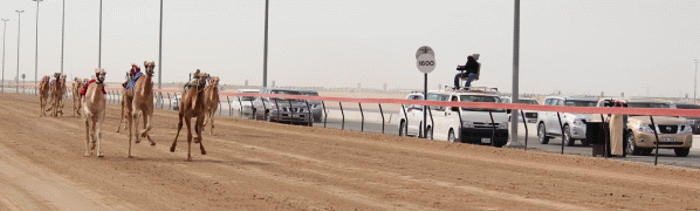
Camel races in Dubai hold a very significant position in the culture of the country. In the past, camels were used for much more than racing. For generations, they were essential to everyday life in the Arabian Peninsula, providing transport, milk, wool and other valuable resources for communities living in the desert. Camels were also closely connected with social gatherings, celebrations and traditional Arab culture. Today, camel racing preserves this heritage while developing into a professionally organised and technologically advanced sport.
Camel Racing History
The camel racing history reaches far back into the traditions of the Arabian Peninsula. Before purpose-built tracks and organised championships existed, camel races were often informal competitions held between families, tribes and communities.
Camels represented endurance, mobility and prosperity in desert life. Racing provided an opportunity for owners to demonstrate the speed and quality of their animals, while important gatherings and celebrations gave communities an occasion to compete.
Over time, these informal competitions developed into organised sporting events. Modern racetracks, professional breeding programmes and major racing festivals have transformed the sport, but its connection with Arabian heritage remains clearly visible.
سباق الهجن – Camel Racing in Arab Culture
Camel racing is commonly known in Arabic as سباق الهجن. The sport has particular cultural importance in the United Arab Emirates and other Gulf countries, including Saudi Arabia, Qatar and Oman.
For many families involved in the sport, racing camels represent considerably more than entertainment. Breeding, raising and training the animals can be a tradition passed from one generation to another.
Readers interested in the Arabic history and terminology of the sport can find further information in our Arabic section about سباق الجمال and our introduction to سباقات الهجن العربية الأصيلة.
Camel Races in Dubai Today
Dubai may be internationally associated with skyscrapers, luxury hotels and futuristic architecture, but traditional Emirati culture remains an important part of the emirate’s identity. Camel races in Dubai are one of the most interesting examples of the relationship between the old and the new.
Modern camel racing is very different from the informal desert races of previous generations. Today’s competitions take place on dedicated tracks and involve specially bred racing camels, experienced trainers and increasingly sophisticated technology.
Visitors may therefore encounter something quite unexpected. While the camel itself represents one of the oldest symbols of Arabian desert culture, a modern camel race can involve advanced training techniques, electronic timing systems and robotic jockeys.
Al Marmoom Camel Racing Track
One of the best-known places associated with camel racing in Dubai is the Al Marmoom area. Located away from the skyscrapers of central Dubai, its desert surroundings provide an appropriate setting for one of the UAE’s most traditional sports.
Al Marmoom Camel Racing Track hosts races and events during the camel racing season and offers visitors an opportunity to experience a side of Dubai that is very different from Downtown Dubai, Dubai Marina or the city’s beach resorts.
The atmosphere of a camel race can itself be fascinating. Owners and trainers may follow their camels in vehicles travelling alongside the track while operating robotic jockeys remotely. The result is an unusual combination of desert tradition and modern technology.
From Traditional Jockeys to Robot Camel Jockeys
Perhaps no development illustrates the transformation of camel racing better than the introduction of robot camel jockeys.
Modern robot jockeys are small, lightweight devices mounted on the camel. Trainers can operate certain functions remotely, including mechanisms used to encourage the animal during a race.
The introduction of robotic systems fundamentally changed the appearance of camel racing and helped move the sport away from the former use of child jockeys.
What remains, however, is the central role of the camel itself and the knowledge required to breed, prepare and train a successful racing animal.
Technology has therefore not simply replaced tradition. Instead, it has become an important part of the modern development of the sport.
Racing Camels – Breeding and Training
Not every camel is suitable for racing. Racing animals are selected for characteristics such as speed, endurance, physical condition and lineage.
Training requires considerable time and knowledge. Young camels gradually become accustomed to exercise before progressing to more demanding training programmes. Nutrition, recovery and veterinary care also play important roles in preparing an animal for competition.
The distances involved can vary according to the age and category of the camels. As in other professional sports, preparation takes place long before spectators arrive at the racetrack.
Successful racing stables therefore combine traditional knowledge of camels with increasingly modern approaches to training and animal care.
Camel Racing in the UAE
Although Dubai is an important destination for people interested in camel racing, the sport extends throughout the United Arab Emirates.
Camel racing is particularly associated with the country’s desert heritage, and major racing facilities and festivals can also be found in other emirates.
The UAE has played an important role in developing traditional camel competitions into the organised sport visitors see today.
This wider perspective is important when understanding camel racing. The sport is not merely another attraction created for Dubai’s tourism industry. Its roots reach much further back than the development of modern Dubai.
Camel Racing Across the Arabian Peninsula
The tradition is also important beyond the UAE. Saudi Arabia has a particularly extensive camel culture, while organised races are an established part of sporting and heritage events in Qatar and Oman.
Each country has developed its own competitions and festivals, but they share the historical relationship between the camel and life on the Arabian Peninsula.
Major events can bring together owners, breeders and racing enthusiasts from different parts of the Gulf region. This has helped transform camel racing from local competitions into a sport with important regional events.
Why Are Camels So Important in Arabian Culture?
To understand the popularity of camel racing, it helps to understand the historical importance of the camel itself.
For centuries, camels made long journeys through difficult desert environments possible. They transported people and goods and provided milk and other resources. Their ability to survive under demanding conditions made them indispensable to many communities.
The camel consequently became closely connected with Bedouin life and the cultural history of the Arabian Peninsula.
Modern Gulf cities have changed dramatically, but the camel has retained its symbolic importance. Racing, camel festivals and breeding traditions help maintain this connection with the region’s past.
Visiting Camel Races in Dubai
For international travellers, watching a camel race can provide a very different experience of Dubai. Instead of shopping malls and skyscrapers, visitors encounter racing tracks, desert landscapes, trainers, owners and animals prepared specifically for competition.
Camel racing is seasonal, and schedules can change according to the event and racing calendar. Visitors should therefore check current race dates, starting times and spectator arrangements before travelling to a track.
Morning races are common, and arriving early can provide a better opportunity to observe the preparations surrounding an event.
Visitors should also remember that camel racing is part of local sporting and cultural life rather than a staged tourist show. Respectful behaviour and consideration for local customs are therefore appropriate.
Camel Racing – Where Tradition Meets the Future
Few sports demonstrate the transformation of the Gulf region quite like camel racing. The fundamental elements are deeply rooted in history: the desert, the camel and a tradition of competition stretching back through generations.
Around them, however, almost everything has evolved. Purpose-built racetracks, professional training, veterinary science, electronic systems and robot jockeys have brought the sport into the modern era.
That combination makes camel races in Dubai particularly fascinating. They provide a connection with the history of the UAE while showing how traditional culture can continue to develop rather than simply becoming part of the past.
At CamelRaces.net, we explore the history, culture, animals, technology and people behind camel racing in Dubai, the UAE and across the Arabian Peninsula.
Whether you are planning to watch a race in Dubai, researching the history of the sport or simply want to understand why camels remain so important to Arabian culture, our aim is to provide useful and carefully researched information about the world of camel racing.