
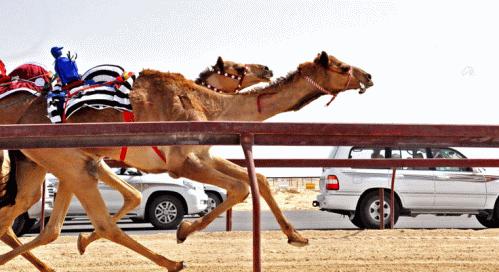
 Camel races in the United Arab Emirates are closely connected with the history and cultural heritage of the country. Long before the development of modern cities such as Dubai and Abu Dhabi, camels played an essential role in everyday life across the Arabian Peninsula. Bedouin communities relied on them for transportation, milk and journeys through the desert, while camel breeding and knowledge of pedigrees became an important part of local tradition. From this close relationship developed a passion for camel racing that remains visible throughout the UAE today.
Camel Races in the United Arab Emirates
Camel racing is much more than a sporting event in the UAE. It represents a connection between the country’s modern identity and its Bedouin past. What once took place as relatively informal races during celebrations and community gatherings has developed into an organised sport with professional training, specialised racetracks and valuable racing camels.
The development of the modern sport accelerated during the second half of the 20th century. Purpose-built racing facilities appeared and greater attention was given to breeding, training and organising competitions.
Today, camel racing remains one of the most distinctive heritage sports in the Emirates.
The Camel in Bedouin Culture
To understand the importance of camel racing, it is necessary to understand the historical importance of the camel itself.
For generations, camels helped people travel across environments where few other animals could survive. They provided transport and milk and were closely connected with the economic and social life of desert communities.
Families paid close attention to the ancestry, health and characteristics of their animals. Knowledge about breeding was passed from one generation to another, and particularly strong or fast camels became a source of pride.
Racing developed naturally within this culture. Owners could compare the speed and endurance of their animals, while races provided entertainment during gatherings and special occasions.
Traditional Arabian Racing Camels
Not every camel is suited to racing. Racing animals are bred and trained with performance in mind, and experienced owners look for a combination of physical characteristics, endurance and temperament.
A racing camel typically has a comparatively lean body, long legs, a long neck and a light athletic build. These characteristics help the animal move efficiently over racing distances.
However, appearance alone does not determine the quality of a racing camel. Genetics, nutrition, training, veterinary care and the individual condition of the animal are all important.
Modern breeding programmes have become increasingly sophisticated, but traditional knowledge about camel bloodlines and pedigrees continues to play a significant role.
Sheikh Zayed and Camel Racing Heritage
The late Sheikh Zayed bin Sultan Al Nahyan, Founding Father of the UAE, placed considerable importance on preserving the country’s cultural heritage while the Emirates underwent rapid modernisation.
Camel racing was part of this heritage. Support for races, breeding and traditional activities helped the sport develop without losing its connection with the country’s past.
This approach remains visible today. Camel racing continues to receive significant attention in the UAE, and major festivals bring together owners, trainers, families and spectators from across the Emirates and other Gulf countries.
The sport therefore occupies an unusual position: it is simultaneously a reminder of traditional desert life and a highly organised part of contemporary Emirati culture.
Camel Racing in Abu Dhabi
Abu Dhabi is one of the principal centres of camel racing in the United Arab Emirates. One of its best-known venues is the Al Wathba Camel Racetrack, where visitors can experience modern camel racing during the season.
Races are commonly held during the cooler months, when conditions are more suitable for the animals and spectators. Early mornings are particularly associated with racing events.
Al Wathba also demonstrates how much the sport has changed. Modern races combine traditional camel breeding with professional training, modern racing infrastructure and remotely controlled robot jockeys.
Camel Races in Dubai
Dubai has its own important camel-racing tradition. The city may now be internationally associated with skyscrapers, luxury hotels and modern tourism, but camel racing preserves a very different part of its identity.
Al Marmoom is one of the best-known camel-racing areas in Dubai and hosts major racing and heritage events. The track attracts owners and racing camels from the UAE and other parts of the Gulf.
Visitors interested specifically in Dubai can read our separate guide to camel races in Dubai.
When Is the Camel Racing Season in the UAE?
The main camel racing season in the UAE generally takes place during the cooler part of the year. Racing activity commonly begins in autumn and continues through winter and into spring, although individual events, festivals and schedules can vary between tracks and seasons.
This period offers much more comfortable conditions than the extreme heat of the UAE summer.
Many races take place early in the morning, so visitors who want to experience camel racing should check the current programme of the relevant racetrack before travelling.
Robot Jockeys Changed Camel Racing
One of the most remarkable developments in modern camel racing has been the introduction of the robot jockey.
Historically, lightweight human jockeys were used because weight has an important influence on racing performance. The use of children as jockeys eventually became a serious welfare and human-rights issue.
The UAE introduced restrictions on child jockeys and moved toward technological alternatives. During the 2000s, remotely controlled robot jockeys became established in professional racing.
The small devices are attached to the racing camel and can be controlled remotely. Owners and trainers can often be seen driving alongside the racetrack in 4×4 vehicles while controlling and following their camels.
The result is one of the most unusual combinations of tradition and technology found in modern sport.
Technology and Modern Camel Racing
Robot jockeys are not the only technological development to influence camel racing. Modern training can include increasingly sophisticated monitoring of an animal’s condition and performance.
Breeding, veterinary medicine and nutrition have also developed considerably. Professional owners and trainers can use modern methods alongside knowledge that has been accumulated by camel breeders over generations.
Yet despite this technological transformation, the basic principle of the race remains remarkably simple: specially bred camels compete against one another over a defined distance to determine which animal is fastest.
Where Can Visitors Watch Camel Racing in the UAE?
Visitors interested in seeing a camel race have several possibilities across the Emirates. Two of the best-known locations are Al Marmoom in Dubai and Al Wathba in Abu Dhabi.
There are also camel-racing facilities in other Emirates. This illustrates how deeply the sport is embedded in the cultural landscape of the country rather than being limited to Dubai and Abu Dhabi.
Race schedules can change, and not every meeting is organised primarily for tourists. Visitors should therefore check current local information before making a special journey to a racetrack.
For anyone interested in Emirati culture, however, watching a race can provide a very different perspective on the UAE from the experience offered by its modern cities and tourist attractions.
Camel Racing as Cultural Heritage
The continuing popularity of camel racing is closely linked to the desire to preserve traditional Emirati culture.
For younger generations, racing events provide an opportunity to experience customs and knowledge connected with the lives of their parents, grandparents and earlier generations. For breeders and owners, the racing camel represents years of knowledge, training and dedication.
Major events are also social occasions. Families, owners, trainers and visitors gather around the tracks, while competitors from different parts of the Gulf meet through their shared interest in racing camels.
From Desert Tradition to Modern UAE Sport
The story of camel races in the United Arab Emirates reflects the wider development of the country itself. A tradition that emerged from desert life has survived enormous economic and technological change.
The surroundings are different today. There are purpose-built racetracks, professional training facilities, sophisticated breeding programmes, modern veterinary care and robot jockeys. Yet at the centre of the sport is still the same animal that played such an important role in life on the Arabian Peninsula for generations.
This combination of heritage and modern technology makes camel racing one of the UAE’s most distinctive traditional sports.
Readers who want to discover how the sport developed over the generations can continue with our article about Camel Racing History. For an overview of races, racing camels and the modern sport, visit our guide to Camel Racing.
Tagged With : Camel Races • camelraces