
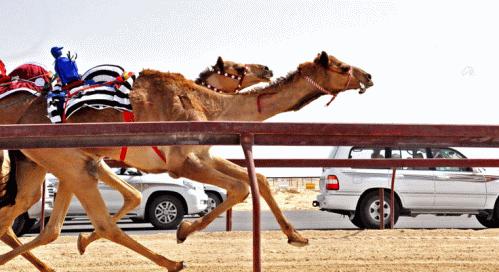
 Camel racing history reaches back much further than the modern racetracks of Qatar, Dubai and Saudi Arabia. For generations, camels were at the heart of everyday life on the Arabian Peninsula, providing transportation, milk and an essential means of travelling across the desert. Racing developed from this close relationship between people and camels and became part of celebrations, tribal gatherings and traditional events. During the second half of the 20th century, these informal competitions gradually developed into the organised professional sport we know today.
Camel Racing History
The origins of camel racing cannot be traced to one particular year. Long before purpose-built racetracks existed, people across the Arabian Peninsula compared the speed, stamina and quality of their camels.
Camels were enormously valuable animals in traditional desert society. A particularly fast or strong camel could therefore become a source of pride for its owner and family. Informal races were held during social gatherings, celebrations and other important occasions.
Weddings are frequently associated with the traditional history of camel races in the Gulf, but it would be misleading to describe weddings as the sole origin of the sport. Camel racing developed within a much broader culture in which the camel played a central role in everyday life.
From Traditional Camel Races to Modern Sport
A major transformation took place during the 20th century. Economic development across the Gulf changed everyday life dramatically, but interest in traditional camel culture remained strong.
From the 1970s onward, countries including Qatar and the United Arab Emirates increasingly developed organised racing structures. Dedicated tracks were built, competitions became more professionally organised and breeding and training developed into increasingly specialised activities.
This period is therefore important in camel racing history, not because camel racing began in the 1970s, but because traditional races increasingly evolved into the modern organised sport seen today.
Camel Racing in Qatar
Qatar played an important role in this transformation. Camel races had long been part of local culture, but organised racing developed considerably during the 1970s and subsequent decades.
Today, Al Shahaniyah is closely associated with professional camel racing in Qatar. The area has become an important centre for owners, trainers and racing camels and hosts major competitions during the racing season.
The development of camel racing in Qatar illustrates an interesting feature of the sport: modern infrastructure and technology have been introduced without removing its connection with traditional Gulf culture.
Camel Racing History in the UAE
The history of camel racing in the UAE is similarly connected with the country’s Bedouin heritage. Before the rapid development of modern cities, camels were indispensable for transportation and survival in the desert.
Racing was one expression of this close relationship. Families and communities could compare their animals during celebrations and gatherings, while breeding fast and healthy camels became a matter of prestige.
Following the formation and development of the modern UAE, considerable attention was given to preserving traditional activities. Camel racing benefited from this interest and developed from informal competitions into an organised sport with dedicated racing facilities.
Readers interested specifically in the UAE can find additional information about camel races in Dubai and their place in modern Emirati culture.


- High Welcome Bonus
- Accepts Arabins-speaking Players
- Multi-currency & language options worldwide
- Friendly 24/ customer support
- Sports Betting & Casino
- Discreet VIP Lounge
Accepts Arabic-speaking Players

- High Bonus
- Accepts Arabic-speaking players
- Accepts players around the world
- Sportbetting in arabic
- Friendly and helpful 24/7 costumer support
- Live betting
Accepts Arabic-speaking Players

The Development of Professional Racing Camels
As camel racing became more organised, the way racing animals were bred and trained changed as well.
Successful racing camels are selected for characteristics such as speed, endurance, physical condition and temperament. Breeding programmes became increasingly sophisticated, while trainers developed specialised routines for preparing animals for different racing distances.
Modern veterinary care, nutrition and training methods have added a scientific dimension to knowledge that camel owners and breeders have accumulated over generations.
This development helped transform camel racing from a traditional pastime into a highly organised competitive sport.
Camel Jockeys – An Important Change in Racing History
The history of the camel jockey also contains a difficult chapter. Lightweight riders were traditionally preferred because additional weight can influence the performance of a racing camel. In the past, children were consequently used as jockeys in parts of the Gulf.
Concerns about child welfare and exploitation eventually led Gulf countries to prohibit the use of child jockeys and introduce technological alternatives.
This change produced one of the most distinctive features of modern camel racing: the robot jockey.
Camel Racing Robot – Technology Changes an Ancient Sport
The introduction of the camel racing robot during the 2000s represented one of the biggest changes in modern camel racing history.
Instead of carrying a human jockey, racing camels can carry a lightweight robotic device controlled remotely by the trainer. During races, trainers and owners often follow their camels in vehicles travelling on a parallel road beside the racetrack.
The technology solved an important welfare problem while allowing the traditional sport to continue developing. Robot jockeys have since become one of the most recognisable features of professional camel racing in countries such as Qatar and the UAE.
Camel Races in Dubai
Dubai provides a particularly interesting example of how an old tradition can survive within an extremely modern city.
International visitors generally associate Dubai with skyscrapers, luxury hotels and modern infrastructure. Yet camel races in Dubai preserve a connection with the emirate’s life before rapid urban development.
Modern racing facilities such as those at Al Marmoom combine traditional camel culture with professional organisation, modern training methods and robot-jockey technology.
For this reason, camel racing should not be viewed simply as a tourist attraction. It remains part of the cultural heritage of the UAE and the wider Gulf region.
Camel Races Across the Arabian Peninsula
Modern camel races are not limited to Qatar or Dubai. Saudi Arabia and Oman also have important racing traditions, while camel competitions take place elsewhere in the region.
Major festivals can bring together breeders, owners, trainers and racing animals from different Gulf countries. The prestige attached to successful racing camels has also encouraged increasingly professional breeding and training.
Despite these changes, the cultural meaning of the sport remains visible. The camel continues to represent endurance, desert life and an important part of Arabian heritage.
From Bedouin Tradition to High-Tech Racing
The most fascinating aspect of camel racing history may be the way the sport has changed without completely losing its identity.
Informal races between locally bred camels gradually gave way to organised competitions. Traditional training was supplemented by modern veterinary knowledge. Simple desert races developed into events at purpose-built tracks. Human jockeys were replaced in many professional Gulf races by remotely controlled robots.
Yet the central element has remained unchanged: the racing camel.
That continuity explains why camel racing remains significant in the Gulf today. It is simultaneously a modern competitive sport and a link to a period when camels were essential to everyday life across the Arabian Peninsula.
The Continuing Story of Camel Racing
Camel racing history is therefore not simply the story of a sport that began in the 1970s. Its cultural roots extend much further into the history of the Arabian Peninsula. The 1970s and subsequent decades instead mark an important period in which traditional races developed into professionally organised competitions.
Today, visitors can see this evolution at racetracks in Qatar, Dubai, Saudi Arabia and other parts of the Gulf. Modern facilities, professional breeding and robot jockeys may have changed the appearance of the sport, but camel racing continues to preserve an unmistakable connection with Arabian history and culture.
For more information about the sport itself, its modern racing format and racing camels, continue with our guide to Camel Racing.
Tagged With : Camel Races • Camel Racing • Camel Racing History